
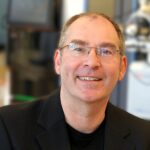
President: Wolfram Weckwerth
wolfram.weckwerth@univie.ac.at
Professor of Molecular Systems Biology
Director of the Vienna Metabolomics Center (VIME), University of Vienna
Academic Career & Positions (selection)
- Since 2025 Head of Research Platform AIPN – Artificial intelligence powered personalized nutrition for disease prevention and well-being, University of Vienna, Austria
- Since 2023 President of the Austrian Society of Plant Biology (ATSPB)
- 2022-2024: Head of the Department Functional and Evolutionary Ecology, University of Vienna, Austria.
- 2013-2022: Head of Large Instrument Facility of Mass spectrometry in Life Sciences, University of Vienna, Austria
- 2013-2019: Head of the Department Ecogenomics and Systems Biology, University of Vienna, Austria.
- Since 2015: Director of the Vienna Metabolomics Center (VIME).
- 2008-2013: Full Professor and Head of Department Molecular Systems Biology, University of Vienna, Austria.
- 2000–2008: Group Leader for "Integrative Proteomics and Metabolomics", Max Planck Institute of Molecular Plant Physiology, Potsdam-Golm, Germany.
- 1998: PhD in Biology/Biochemistry, Technical University of Berlin, Germany.
Scientific Contribution: Panomics, Green Systems Biology & The Holobiont
Wolfram Weckwerth is a pioneering researcher in Systems Biology, Metabolomics and Panomics, noted for integrating molecular high‑throughput analyses (genomics, transcriptomics, proteomics, metabolomics and metabolic modelling) with studies of ecological resilience. A defining milestone in the field was his formal conceptualization of Green Systems Biology in the 2011 publication "Green Systems Biology: From single genomes, proteomes and metabolomes to ecosystems research and biotechnology". This work moved the discipline beyond reductionist gene analysis toward a holistic understanding of plants as dynamic components of complex ecosystems. Building on this foundation, his current research advances the Holobiont concept as a new nexus in plant breeding, viewing the plant and its microbiome as a single functional unit and leveraging chemical signaling between roots, soil microbes and soil function to enhance sustainability of agroecosystems, plant nutrient efficiency, productivity and stress resilience in a severely changing climate.
Global Food Security & CGIAR Collaborations
His research has substantial practical implications for global food security in the era of anthropogenic climate change. A central element of this contribution is the concept of “PANOMICS meets Germplasm.” which was coined by him and colleagues. This concept frames the systematic integration of multi‑omics data and genomic prediction with global germplasm collections as a new paradigm for identifying climate‑adaptive traits. In this framework Weckwerth maintains extensive collaborations within the CGIAR network, most notably with ICRISAT (India) and CIMMYT (International Maize and Wheat Improvement Center, Mexico). A cornerstone of this work is the study of the Wheat Holobiont, specifically focusing on Biological Nitrification Inhibition (BNI). By identifying wheat genotypes that naturally secrete compounds to suppress soil nitrification, his research aims to reduce nitrogen leaching and greenhouse gas emissions, thereby creating more climate-resilient and nitrogen-efficient cropping systems. This work is extended to Pearl Millet, other cereal crops and Chickpea underscoring the impact on securing food production in the Global South.
Planetary Health & Human Health
Weckwerth’s research extends to the intersection of Planetary Health and Human Health. He investigates how plant-based diets affect human physiology. A specialized area of his current interest is the effect of natural products from plant-based diets on the human immune system. By analyzing how plant-derived compounds modulate inflammatory responses and immune functions, his work links sustainable agricultural practices with the prevention of diseases, advocating for a food system that supports both environmental stability, public and individual health. The recently funded research platform AIPN – Artificial intelligence powered personalized nutrition for disease prevention and well-being at the University of Vienna follows this paradigm.
Bibliometric Indices & Global Recognition
Weckwerth’s scientific impact is documented by high-ranking metrics that place him among the internationally highly cited researchers in plant and life sciences:
- Total Citations (March 2026 Google Scholar): >33,500
- h-index: 89 (top 1% of the most frequently cited scientists globally).
- i10-index: 267
Theoretical & Philosophical Contributions
Beyond empirical data, Weckwerth is a vital theorist of 21st-century biology. Through his leadership in the Philosophical-Biological Seminar at the University of Vienna, he contributes to the discourse on System Theory, emergence, and self-organization. He advocates for a move beyond reductionism, arguing that biological complexity requires a theoretical framework that accounts for the non-linear interactions of the "whole", thus establishing a synthesis between high-technology research and the conceptual philosophy of life. This interdisciplinary approach ensures that high-throughput "OMICS" data is interpreted within a robust theoretical framework, addressing the complex interactions of life from the molecular level to the ecosystem.

Secretary General: Laura De Gara
Dean of the Department of Science and Technology for Humans and the Environment UCBM
l.degara@unicampus.it
Full Professor of Plant Physiology Campus Bio-Medico University of Rome (UCBM)
Deputy Vice Chancellor
Relevant Scientific Professional Services:
2007-2009 Elected President of the Plant Oxygen Group of the Society for Free Radical Research – Europe
2008–2013 Member of the Executive Committee of the Italian Society of Plant Biology
2008-2010 Member of the Grants & Awards Committee of the Federation of European Societies of Plant Biology (FESPB).
2012–2019 Member of the Executive Committee of the FESPB as Chair of the Grants & Awards Committee
2014 Member of the Plant Biology Panel for the evaluation of projects on Plant Biology in Space presented for founding by NASA, ESA, JAXA
2015-2017 President of the Evaluation Committee of the Research Centers controlled by Italian Ministry of Agriculture
2017-2021 Member of the Scientific Committee or the Consiglio per la ricerca in agricoltura e l’analisi dell’economia agraria (CREA)
2019 Elected Vice-president for the year 20-21and President for the years 22-23 of the Italian Society of Plant Biology
2019- Member of the Scientific Council of the Department of Biology, Agriculture and Food Sciences (Consiglio Nazionale delle Ricerche)
2020-Elected Secretary General of the FESPB
Scientific interests:
Redox signaling in plant, plant-environment interaction, plant bio-active molecules.
De Gara, Laura - Author details - Scopus

Treasurer: Christian Zörb
Quality of Plant Products and Viticulture
christian.zoerb@uni-hohenheim.de - treasurer@fespb.org
Research interests: Crop Plants, Abiotic Stress Physiology, Viticulture, Wheat, Climate Change, Quality Aspects, Plant Nutrition
h-index Jan 2021, 34
Please see list of more than 100 peer reviewed articles at Goolge Scholar.
Since 2014 – Professor of Quality of Plant Products and Viticulture, Univ. of Hohenheim
2012–2014 – Professor of General and Applied Botany, Univ. of Leipzig, Institute of Biology
2012–2013 – Senior Scientific Fellow, School of Biology, Univ. of Sussex, Brighton, UK
2007–2012 – Research Associate, Univ. of Kiel, Institute of Plant Nutrition and Soil Science
2005–2007 – Research Associate, Bundesanstalt für Ernährung und Lebensmittel, Detmold
1999–2007 – PostDoc experience in several labs including UK, USA and Germany
Habilitation, Justus Liebig Univ. Giessen, Venia legendi in Plant Nutrition
1998 – Dr. rer. nat. (PhD), Justus Liebig Univ. Giessen, Faculty of Biology
1988 – Diploma in Biology (Plant Science), Justus Liebig Univ. Giessen
Chair of the Awards Committess: tbd

Chair of the Grants Committee: Wojciech Strzałka
Head of the Department of Plant Biotechnology, Faculty of Biochemistry, Biophysics, and Biotechnology, Jagiellonian University in Cracow
Research interests: DNA replication and repair, plant biotechnology, application od DNA aptamers
Research stays abroad
2015 UNAM, Mexico
2008 Open Laboratories of Advanced Bioscience and Biotechnology (OLABB) Institute for Protein Research, Osaka University, Japan
2008 University of Salento, Di.S.Te.B.A., Lecce, Italy
2007 Botanisches Institut und Botanischer Garten, Der Christian-Albrechts-Universität zu Kiel, Germany
2005 Dipartimento di Biologia delle Piante Agrarie, Università di Pisa, Italia
2003 August Purdue University, West Lafayette, IN USA
2001 May Institute of Molecular and Structural Biology, Aarhus University, Denmark
1999 Academic Medical Centre, University of Amsterdam, Netherlands
Academic degrees
2018 DSc., Natural Sciences, Jagiellonian University, Faculty of Biochemistry, Biophysics and Biotechnology
2007 PhD. in Biology , Jagiellonian University, Faculty of Biochemistry, Biophysics and Biotechnology
2001 MSc. in Biotechnology, Jagiellonian University, Faulty of Biology and Earth Sciences

Chair of the Publication Committee (and Web Media): János Györgyey
gyorgyey.janos@brc.hu
János Györgyey is the president of the Hungarian Plant Biology Society since 2006, national representative since 2012. He have got his diploma at the University of Szeged as biologist in 1985. He obtained Ph.D. at the Hungarian Academy of Sciences in 1996 for his thesis entitled "Gene expression changes during hormone activated cell division and somatic embryogenesis in alfalfa". He began his research carrier in the same year in the Biological Research Centre, Szeged, Hungary where he is senior researcher now and principal investigator of the research unit working on Brachypodium distachyon. His main interests are plant molecular biology, developmental genetics, and abiotic stress physiology. With his colleagues, currently they are studying root development of Brachypodium focusing on LOB-domain transcription factor family, the effects of limiting water supply on root architecture, as well as the involvement of circadian clock in drought stress adaptation in roots. His publications and citation data can be find in the Hungarian Scientific Bibliography database (https://m2.mtmt.hu/gui2/?type=authors&mode=browse&sel=10002548&view=pubTable).
Past Executives
Past Presidents
1976–1978 Charles P. Whittingham, UK
1978–1980 Ernesto Vieitez, SPAIN
1980–1982 Roman Antoszewski, POLAND
1982–1984 Henri Duranton, FRANCE
1984–1986 Hartmut K. Lichtenthaler, GERMANY
1986–1988 Miloje R. Saric, YUGOSLAVIA
1988–1990 Ola Heide / Prof. Dr. Gunar Oquist, SWEDEN
1990–1992 Jean-Pierre Verbelen, BELGIUM
1992–1994 Stanislav Prochazka, YUGOSLAVIA
1994–1996 Amedeo Alpi, ITALY
1996–1998 Emanuil N. Karanov, BULGARIA
1998–2000 Laszlo Erdei, HUNGARY
2000–2002 Kalliopi A. Roubelakis-Angelakis, GREECE
2002–2004 Franciszek Dubert, POLAND
2004–2006 Christian Dumas, FRANCE
2006–2008 Jan Schjoerring, DENMARK
2008–2010 Jose Pio Beltran, SPAIN
2010–2012 Heinz Rennenberg, GERMANY
2012–2014 Bruce Osborne, IRELAND
2014–2016 Jana Albrechtová, CZECH REPUBLIC
2016-2018 Stefan Jansson, SWEDEN
2018- 2021 Andrea Schubert, ITALY
2021-2023 Christophe Robaglia, FRANCE
2023-2025 János Györgyey, HUNGARY
Past Secretaries General
1978–1984 John Dale, Edinburgh, UK
1984–1988 Peter Boger, Kostanz, GERMANY
1992–1998 Hans Lambers, AUSTRALIA
1998–2004 Mike Jackson, UK
2004–2012 Kalliopi A. Roubelakis-Angelakis, GREECE
2012-2019 Christine Helen Foyer UK
Past Treasurers
1994–2004 Renate Scheibe, Germany
2004–2008 Heinz Rennenberg, Germany
2008–2012 Karl-Josef Dietz, Germany
2012–2020 Heinz Rennenberg, Germany
Past Chairs of Grants & Awards Committee
2004-2012 Christine Foyer, UK
2012-2018 Laura De Gara, Italy
2020 -2023 Prof Jana Albrechtova, Czech Republic
2023-2025 Isabel Diaz Rodriguez, Spain
Past Chairs of the Publication Committee
María Dolores Rodrígue, Salamanca SPAIN