wolfram.weckwerth@univie.ac.at
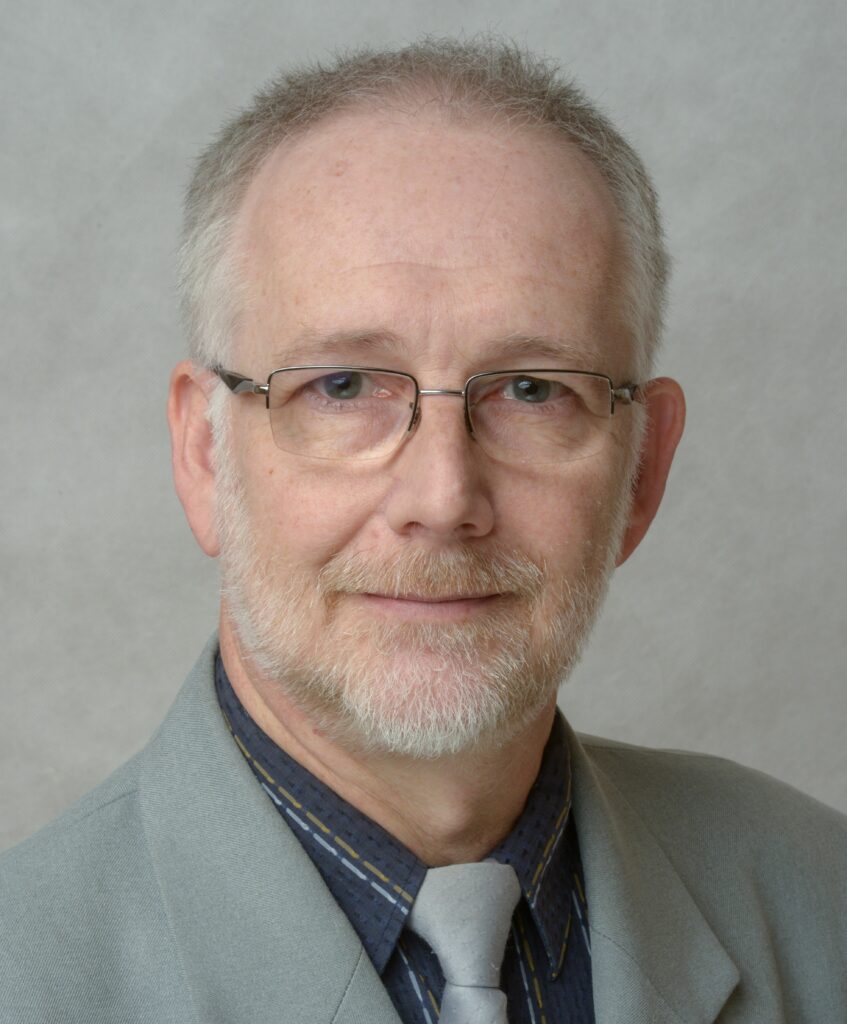
Professor of Molecular Systems Biology
Director of the Vienna Metabolomics Center (VIME), University of Vienna
Academic Career & Positions (selection)
- Since 2025 Head of Research Platform AIPN – Artificial intelligence powered personalized nutrition for disease prevention and well-being, University of Vienna, Austria
- Since 2023 President of the Austrian Society of Plant Biology (ATSPB)
- 2022-2024: Head of the Department Functional and Evolutionary Ecology, University of Vienna, Austria.
- 2013-2022: Head of Large Instrument Facility of Mass spectrometry in Life Sciences, University of Vienna, Austria
- 2013-2019: Head of the Department Ecogenomics and Systems Biology, University of Vienna, Austria.
- Since 2015: Director of the Vienna Metabolomics Center (VIME).
- 2008-2013: Full Professor and Head of Department Molecular Systems Biology, University of Vienna, Austria.
- 2000–2008: Group Leader for “Integrative Proteomics and Metabolomics”, Max Planck Institute of Molecular Plant Physiology, Potsdam-Golm, Germany.
- 1998: PhD in Biology/Biochemistry, Technical University of Berlin, Germany.
Scientific Contribution: Panomics, Green Systems Biology & The Holobiont
Wolfram Weckwerth is a pioneering researcher in Systems Biology, Metabolomics and Panomics, noted for integrating molecular high‑throughput analyses (genomics, transcriptomics, proteomics, metabolomics and metabolic modelling) with studies of ecological resilience. A defining milestone in the field was his formal conceptualization of Green Systems Biology in the 2011 publication “Green Systems Biology: From single genomes, proteomes and metabolomes to ecosystems research and biotechnology”. This work moved the discipline beyond reductionist gene analysis toward a holistic understanding of plants as dynamic components of complex ecosystems. Building on this foundation, his current research advances the Holobiont concept as a new nexus in plant breeding, viewing the plant and its microbiome as a single functional unit and leveraging chemical signaling between roots, soil microbes and soil function to enhance sustainability of agroecosystems, plant nutrient efficiency, productivity and stress resilience in a severely changing climate.
Global Food Security & CGIAR Collaborations
His research has substantial practical implications for global food security in the era of anthropogenic climate change. A central element of this contribution is the concept of “PANOMICS meets Germplasm.” which was coined by him and colleagues. This concept frames the systematic integration of multi‑omics data and genomic prediction with global germplasm collections as a new paradigm for identifying climate‑adaptive traits. In this framework Weckwerth maintains extensive collaborations within the CGIAR network, most notably with ICRISAT (India) and CIMMYT (International Maize and Wheat Improvement Center, Mexico). A cornerstone of this work is the study of the Wheat Holobiont, specifically focusing on Biological Nitrification Inhibition (BNI). By identifying wheat genotypes that naturally secrete compounds to suppress soil nitrification, his research aims to reduce nitrogen leaching and greenhouse gas emissions, thereby creating more climate-resilient and nitrogen-efficient cropping systems. This work is extended to Pearl Millet, other cereal crops and Chickpea underscoring the impact on securing food production in the Global South.
Planetary Health & Human Health
Weckwerth’s research extends to the intersection of Planetary Health and Human Health. He investigates how plant-based diets affect human physiology. A specialized area of his current interest is the effect of natural products from plant-based diets on the human immune system. By analyzing how plant-derived compounds modulate inflammatory responses and immune functions, his work links sustainable agricultural practices with the prevention of diseases, advocating for a food system that supports both environmental stability, public and individual health. The recently funded research platform AIPN – Artificial intelligence powered personalized nutrition for disease prevention and well-being at the University of Vienna follows this paradigm.
Bibliometric Indices & Global Recognition
Weckwerth’s scientific impact is documented by high-ranking metrics that place him among the internationally highly cited researchers in plant and life sciences:
- Total Citations (March 2026 Google Scholar): >33,500
- h-index: 89 (top 1% of the most frequently cited scientists globally).
- i10-index: 267
Theoretical & Philosophical Contributions
Beyond empirical data, Weckwerth is a vital theorist of 21st-century biology. Through his leadership in the Philosophical-Biological Seminar at the University of Vienna, he contributes to the discourse on System Theory, emergence, and self-organization. He advocates for a move beyond reductionism, arguing that biological complexity requires a theoretical framework that accounts for the non-linear interactions of the “whole”, thus establishing a synthesis between high-technology research and the conceptual philosophy of life. This interdisciplinary approach ensures that high-throughput “OMICS” data is interpreted within a robust theoretical framework, addressing the complex interactions of life from the molecular level to the ecosystem.